
The cable should press is a good but heavily overlooked exercise for strengthening the deltoids and building pressing strength.
Read on to learn what makes the movement unique and why it might be worth it over traditional dumbbell or barbell presses.
Table of Contents
Main Takeaways
-
The cable shoulder press is a compound exercise targeting the deltoids, triceps, and upper chest with constant tension throughout the movement.
-
Unlike free weights, cables provide resistance at every point of the rep, improving muscle activation and growth potential.
-
Proper form includes engaging the abs, lowering elbows slightly below shoulder level, and pressing forward and up for joint safety.
What Is This Press?
The cable shoulder press is a compound accessory exercise that primarily targets the deltoids (front and side portions), triceps, and upper chest.
You could perform numerous variations, including standing, seated, kneeling, and alternating. You could also use different attachments (e.g., a straight bar or handles) and a neutral grip (palms facing one another) or position your hands to face forward.
A noticeable difference between cable presses and other shoulder press variations is that cables lead to more tension. As a result, you might feel your muscles working harder and experience a greater burning sensation by the end of each set.
Steps to Perform a Rep
Things to keep in mind:
- Flex your abs to maintain stability
- Lower your elbows slightly below shoulder level
- Press slightly forward and up to keep your shoulders at a comfortable angle
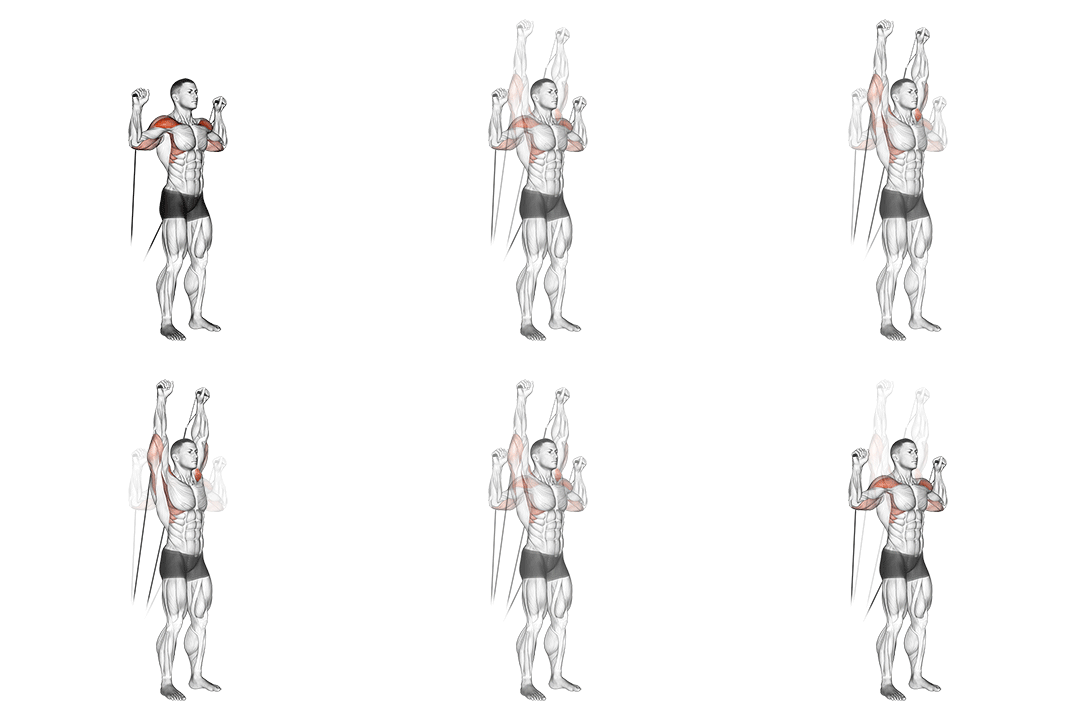
How to (standing, double cable machine, with handles):
- Set both pulleys at a low position, attach handles, and select the appropriate load.
- Grab both handles individually, stand in the middle of the machine, and raise your arms to your sides with your elbows bent. Stagger your stance for extra support if you want.
- Retract your shoulder blades, take a deep breath, and engage your abs.
- Press both handles up and in, bringing your hands together overhead.
- Pause briefly and lower the handles to your sides as you exhale.
- Once finished, walk over to one side of the cable machine, set the stack down slowly, then walk to the opposite side and release the handle.
Cable Shoulder Press Video
Benefits
The most notable benefit of the cable shoulder press is that you experience constant tension, which improves muscle activation and could lead to better growth. Unlike free weights that are influenced by gravity, cables continue to challenge your muscles at every point of each rep.
Another benefit is that you can create the necessary overload to build strength and train your shoulders harder as time passes. The primary way to do that is to lift more weight, but you can also manipulate the tempo (e.g., do slower reps) or even increase the range of motion.
Speaking of that, the cable shoulder press allows you to experiment with different variations to see what works best and avoid stagnation in your training.
Tweaks & Variations
1. One Arm Standing Cable Shoulder Press
Instead of training both sides together, attach a handle to one cable pulley, grab it, do as many reps as you want, then turn to the other side and repeat.
2. Kneeling Cable Shoulder Press
Kneeling can improve your stability and allow you to press more weight without feeling wobbly. Plus, you can do these while facing the cable pulley, allowing you to press in a strictly vertical line instead of forward and up.
3. Cable Alternating Press
Rather than pressing both cables up, you extend one arm at a time. Doing so gives each shoulder a temporary break between reps, potentially allowing you to do slightly more total reps.
Safety Tips and Final Considerations
The cable shoulder press is somewhat tricky to set up, so our first tip is to take your time and set it up correctly. Engage your abs and start with a lighter weight to stay safe and reduce the injury risk.
Also, take your time to warm up well before you start. Do some light cardio (e.g., incline treadmill walking at a low speed for five minutes) and proceed to dynamic stretching (e.g., arm swings, elbow rotations, wrist twists, etc.). (1)
Once done, do two or three warm-up sets with a light weight to prepare the muscles you’ll be working.
Then, proceed to your workout.
Build strength and definition with this shoulder workout that targets all major deltoid muscles for a well-rounded upper body.
Enhance your chest development with a cable chest workout, which provides constant tension for greater muscle activation and growth.
Click for more cable workouts.

David Williams
A diet and fitness enthusiast, David is an ex-Army Airborne Ranger and Infantry soldier with decades of fitness and wellness experience. A West Point graduate with a degree in engineering, he focuses on technical research related to fitness, nutrition, and wellness. He loves the beach and working out, and spending time with his wife and daughters.
References
- Chertoff, J. (2019, May 23). Dynamic stretching: Benefits, when to use, examples, and more. Healthline.
https://www.healthline.com/health/exercise-fitness/dynamic-stretching